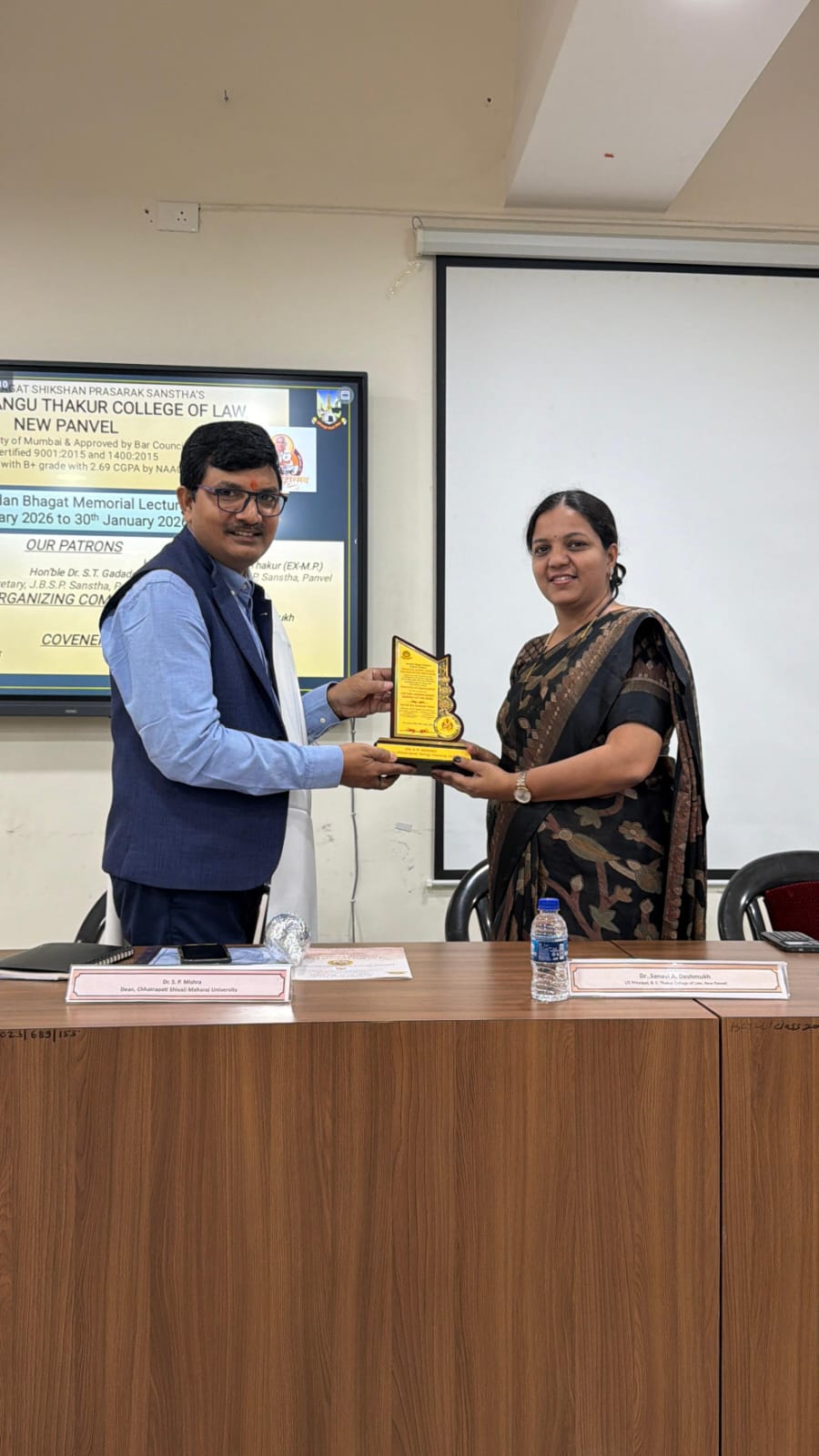
Bhagubai Changu Thakur College of Law, New Panvel, organized the Late Shri Janardan Bhagat Memorial Lecture Series from 27th to 30th January 2026 in the college seminar hall. The lecture series was convened by Assistant Progressors Mrs. Ravnish Becto
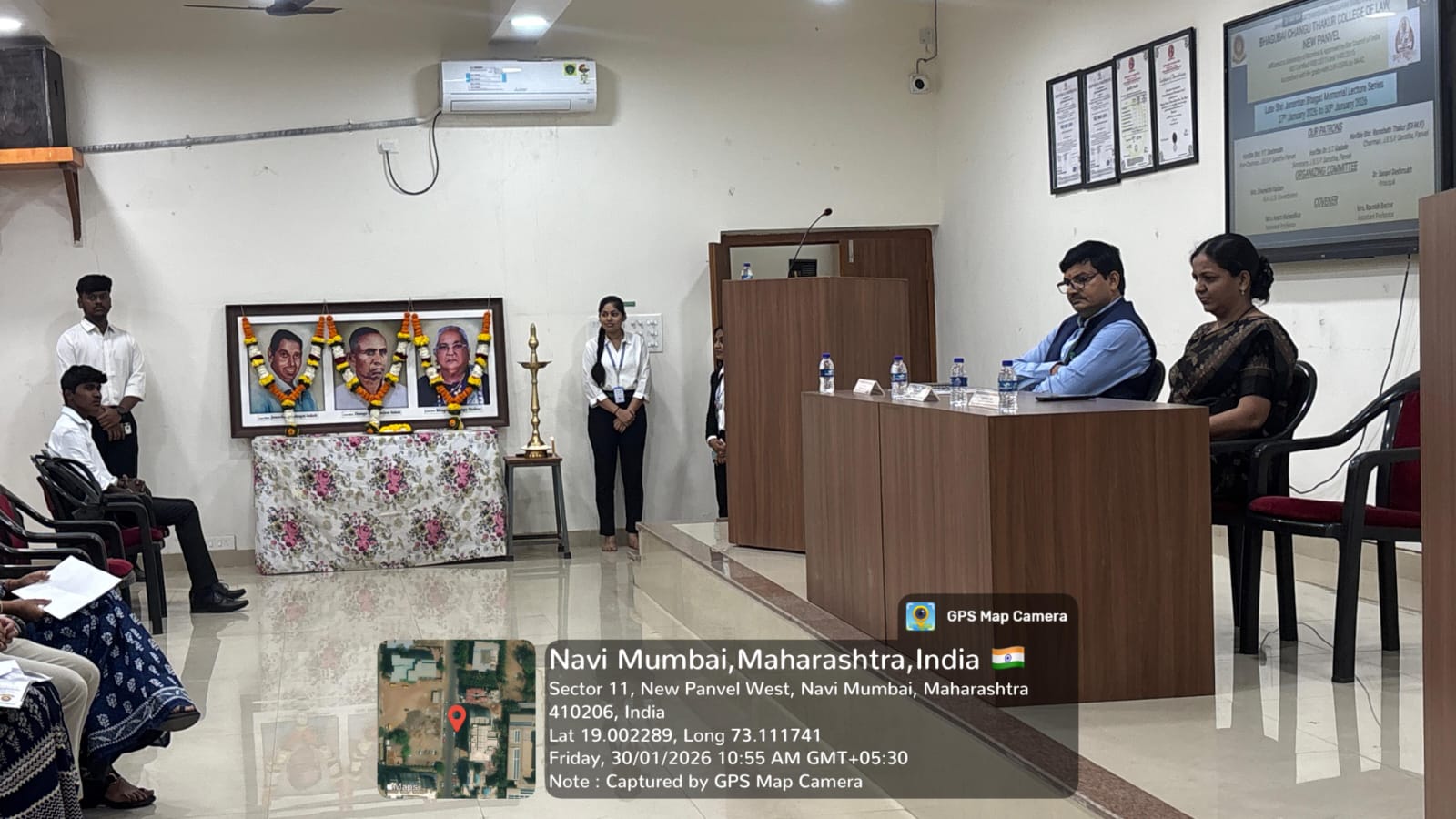
Bhagubai Changu Thakur College of Law, New Panvel, organized the Late Shri Janardan Bhagat Memorial Lecture Series from 27th to 30th January 2026 in the college seminar hall. The lecture series was convened by Assistant Progressors Mrs. Ravnish Bector and Mrs. Anam Mehandikar, under the guidance of Dr. Sanavi Deshmukh, In-charge Principal of the college. The inaugural session of the series was graced by Dr. S.P. Mishra.
The Fourth day i.e., 30th January 2026 of the lecture series featured. Dr.S.P. Mishra Dean Faculty of Law Chhatrapati Shivaji Maharaj University, as the guest speaker. He delivered an enlightening lecture on the topic "One Nation One Election: Pros and Cons" which drew keen interest from students and faculty members alike.
During the lecture, Dr. Mishra began the lecture by tracing the history of elections in India, emphasizing that the idea of One Nation, One Election is not new. After the adoption of the Constitution of India in 1950, the first General Elections (1951-52) were conducted simultaneously for the Lok Sabha and State Legislative Assemblies. This system of simultaneous elections continued during the 1950s and 1960s, including the elections of 1957, 1962, and 1967.
The lecture placed strong emphasis on the constitutional provisions related to elections, highlighting the following key aspects:
Article 324 of the Constitution vests the power of conducting elections in the Election Commission of India, ensuring free and fair elections.
Articles 83 and 172 prescribe the normal tenure of the Lok Sabha and State Legislative Assemblies as five years, unless dissolved earlier.
The Constitution allows flexibility in dissolution, which has historically contributed to the breakdown of simultaneous elections.
Dr. Mishra explained that implementing One Nation, One Election would require constitutional amendments, changes in election laws, and possibly adjustments to the provisions related to the duration and dissolution of legislative bodies.
In his concluding remarks, Dr. S. P. Mishra emphasized that while One Nation, One Election offers administrative and economic benefits, it must be carefully evaluated in the context of India's constitutional philosophy, democratic values, and federal structure. He stressed that any move toward simultaneous elections should be based on wide political consensus, constitutional safeguards, and respect for democratic diversity.
The lecture was highly informative and provided students with a balanced understanding of the historical, constitutional, and practical dimensions of the issue
The session was efficiently anchored by Ms. Gayatri Gokhale student of LLB 3nd year, ensuring smooth conduct of the program. The event concluded with a vote of thanks delivered by Ms. Shraddha Kurane Student of BALLB 2nd year, expressing gratitude to the guest speaker, organizers, and participants. The lecture proved to be highly informative and beneficial, enriching the academic understanding of students in the evolving field of insolvency and bankruptcy law.


66700a0c-e9c1-44a0-86ea-861067182718.jpg)
66700a0c-e9c1-44a0-86ea-861067182718.jpeg)
66700a0c-e9c1-44a0-86ea-861067182718.jpeg)
66700a0c-e9c1-44a0-86ea-861067182718.jpeg)